
Chinese telecom gear giant Huawei Technologies has sought permission for access to the government's 'Trusted Telecom Portal' which went live on June 15 so that it can share details about the telecom products which telecom service providers have agreed to buy from it. The move is significant as sources close to the development say that, according to Chinese telecom companies' interpretation, the new National Security Directive on the telecom sector does not in any way prohibit them from participating in the process of selling telecom equipment of any kind to private telcos. The firm is waiting for a response from the government. It declined to comment.

33-year-old Abhishek Banerjee has emerged as the most visible and significant leader in the party after his pishi (aunt), Mamata Banerjee reports Ishita Ayan Dutt.
Most of the changes have come about in the last four years and ITC is now reaping the dividends - standalone revenues from the non-cigarettes FMCG business have grown 40 per cent from FY17 to Rs 14,728.21 crore in FY21 and pre-tax profits 30 times to Rs 823.69 crore. The business accounted for 30.58 per cent of gross revenues and 4.85 per cent of pre-tax profits in FY21. "In the last four years, our margins in FMCG have gone up by 640 basis points (bps) and EBITDA margins have been moving up consistently. "We created levers that enabled a sustained growth trajectory," said ITC chairman and managing director Sanjiv Puri. Puri took charge as the chief executive officer in 2017; in 2018, he was redesignated managing director and effective May 2019, he became chairman.
Sensing a huge opportunity in the healthcare sector during the Covid-19 pandemic and its aftermath, private equity (PE) players are upping their investments in the space. According to data from research platform VCCEdge, the PEs have together invested a staggering $583.82 million in the first five months of 2021 in five deals, which is the highest investment in the sector in the last five calendar years - from 2016 to 2020. The second highest investment in the sector took place in 2017, when PEs invested $503 million in 18 deals, with an average deal size of $29. 9 million.

Scanty rainfall, last year's lockdown, growing competition from Nepal and the disaster of the 2017 Gorkhaland agitation are steadily weakening exports and sales of Darjeeling tea.

Those who know Alapan Bandyopadhyay describe him as measured, tactical and extremely focused on achieving what he sets out to do. To many it came as a surprise that he would cut short a meeting with the prime minister.
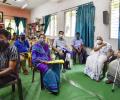
'Everyone wants to take a vaccine. The last time a camp was held, there were 1,000 people for 500 doses. People are waiting and returning disappointed. At times, it is creating problems. The demand is much more than the supply.' Ishita Ayan Dutt reports on how the West Bengal countryside is reacting to the vaccination drive.

To create a community, the consumer can share the details of the offer with friends and family who want to buy the same goods.

Based on industry estimates, telecom companies, including Bharti Airtel, Reliance Jio, Vodafone Idea and BSNL, are expected to invest over $10 billion on buying 5G telecom equipment in the next five years as they transition from non-standalone networks to standalone 5G networks.

The Telecom Regulatory Authority of India (Trai) has directed the Cellular Operators Association of India (COAI) to make a presentation detailing the pros and cons of the controversial Indian 5G standard, also known as 5Gi, which the government has been pushing for. The move comes after serious differences emerged among telcos with regard to the technology's efficacy and implementation.

Though the mandate is seen largely an outcome of Banerjee's welfare schemes, she has promised to industrialise at a faster pace, or so read the manifesto.
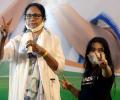
'The last three phases, the Trinamool gained more than expected due to Covid mismanagement by the Centre.'
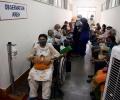
UP Rs 50 billion, followed by Maharashtra, Bihar, and West Bengal which may need close to Rs 25 billion for the massive task.
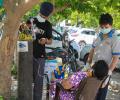
Over the weekend, many companies stepped in to ease the bottleneck in supply and transportation of oxygen, as demand ran high with the surge in cases.

The promoter-brothers, distant cousins to IndiGo's Rahul Bhatia, are eyeing Air India's ground handling subsidiary to augment their aviation services business even as they make a big play in EVs.

The car was expected to have a price tag of Rs 10 lakh and launch was slated for this June.

India Ratings expects long products demand growth to be sharp, supported by a demand push from the government-led infrastructure investments in affordable housing, railways, rural electrification and road networks.

Known for its phones and emerging from nowhere in the segment, it might take on the scooter Goliaths.
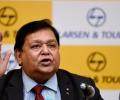
'Revival is happening slowly.' 'But that is, if the pandemic is controlled.'

In a communication to the empowered committee on PLI recently, the Indian Cellular & Electronics Association (ICEA) has stated that except one player (Samsung), all the other eight players (which include vendors of Apple Inc) selected under the scheme were facing numerous challenges in fulfilling the qualification criteria.
 © 2026 Rediff.com - Advertise with us - Disclaimer - Privacy Policy - Sitemap - Feedback - About us - Terms of use - Grievances